

On Feb. 12, Utah Valley University’s Biology Department celebrated Charles Darwin’s 217th birthday in its annual Darwin Day celebration, a reminder of the importance of evolution. This year’s guest speaker was Dr. Jessica Ware, curator of the American Museum of Natural History (AMNH) in New York City. A renowned evolutionary biologist, Dr. Ware spoke about her research on dragonflies and damselflies, and how insects are essential and integrated into the world’s history.
According to Dr. Ware, there are more insects than any other animal, both in terms of the number of species and total population. The Smithsonian Institution estimates that there are 30 million insect species and 10 quintillion individual insects living today. Dr. Ware also talked about the rich evolutionary history of insects. Insects were the first animals on earth to fly — long before birds or dinosaurs.
Dr. Ware specifically studies the evolution of Odonata (dragonflies and damselflies) and Dictyoptera (cockroaches, termites and mantises). According to Ware, dragonflies existed more than 350 million years ago, predating dinosaurs by nearly 100 million years.
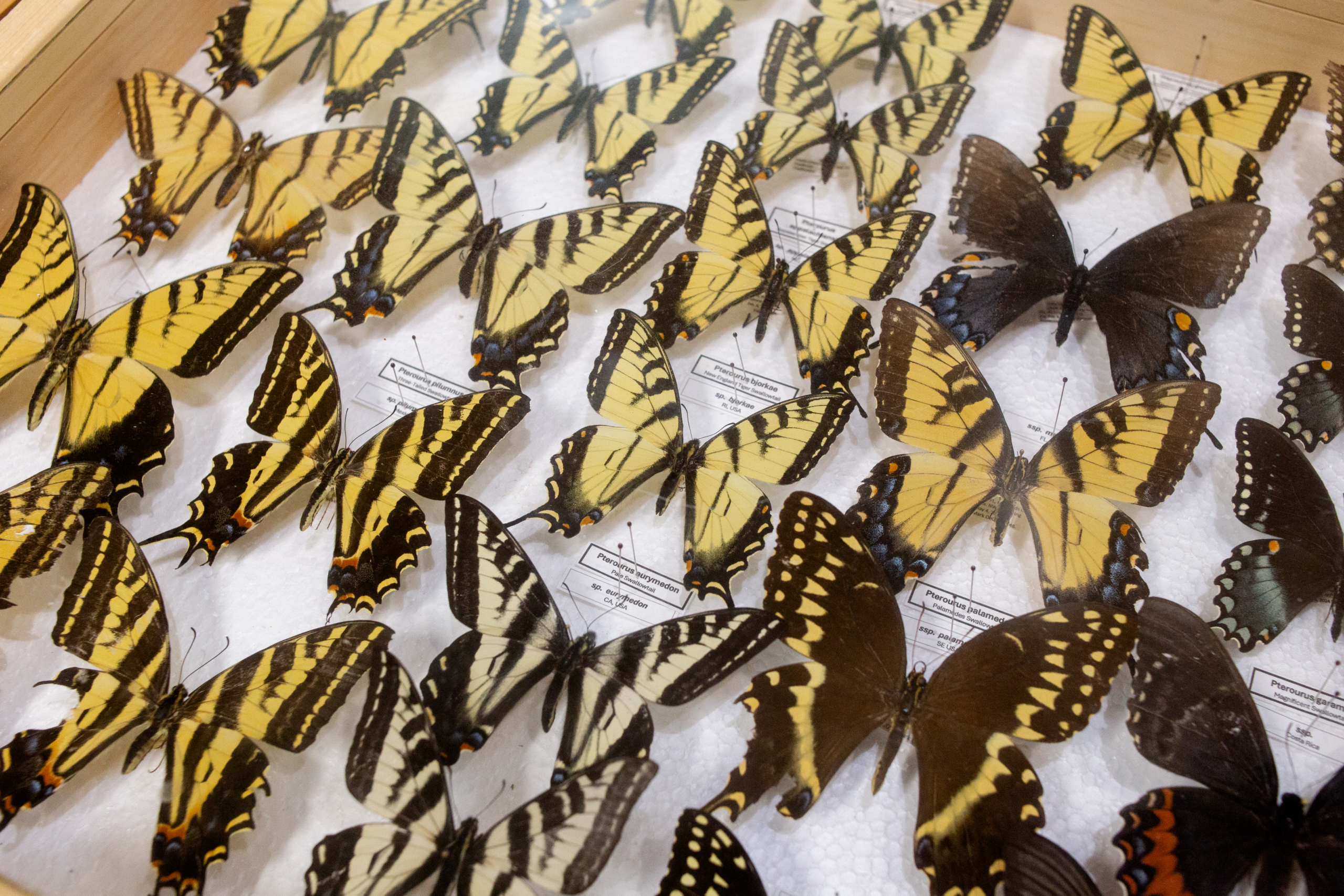
To determine how these insects are related, Dr. Ware relies on vast insect collections like the ones found at AMNH, which houses over 20 million invertebrates. She also travels around the world to collect additional insect species, especially in South America and the Arctic. Dragonflies and damselflies can be found everywhere on earth except Antarctica. Evolutionary biologists like Dr. Ware look at small changes that happen over long periods of time, so having a large amount of data from insect collecting is essential to model how much change is really happening.

Dr. Ware is partially interested in dragonflies because they are responding to climate change faster than any species on earth. Dragonflies also help protect and recover freshwater ecosystems.
Dr. Ware then discussed the urgent problem of insect decline and climate change. Insect populations are collapsing at unprecedented rates around the world, threatening ecosystems and human survival. Habitat loss, pesticides, species invasion, deforestation, desertification, extreme weather and pollution have all contributed to this issue.
“Insect decline is a global problem, which requires global solutions,” Dr. Ware stated. She believes students can help solve this problem by voting for legislators who care about insects, freshwater conservation and green spaces. Using less insecticides and creating more insect-friendly green spaces can also protect the future of insects.
Utah residents who want to learn more about insects can visit the Natural History Museum of Utah, which currently hosts the Bug World exhibit until Sept. 7, 2026. They can also take Entomology (ZOOL3430) at UVU, offered in fall 2026. Students can learn more about Dr. Jessica Ware’s work by viewing her appearances on the PBS docuseries Insectarium and Bugs that Rule the World, and the podcast Ologies. Entomology — the study of insects — has many career opportunities, including work in vector biology, forensics and bioengineering, according to Dr. Ware.

Darwin Day was also filled with student presentations, science club tabling, snake petting, insect collections and a birthday cake. Many student clubs, including the Evolution and Bioinformatics Club, the Botany Club and the BioHive Club helped UVU’s community connect to science during the event. For UVU students, the event celebrated evolution, insects and the scientific innovation happening both on campus and globally.


